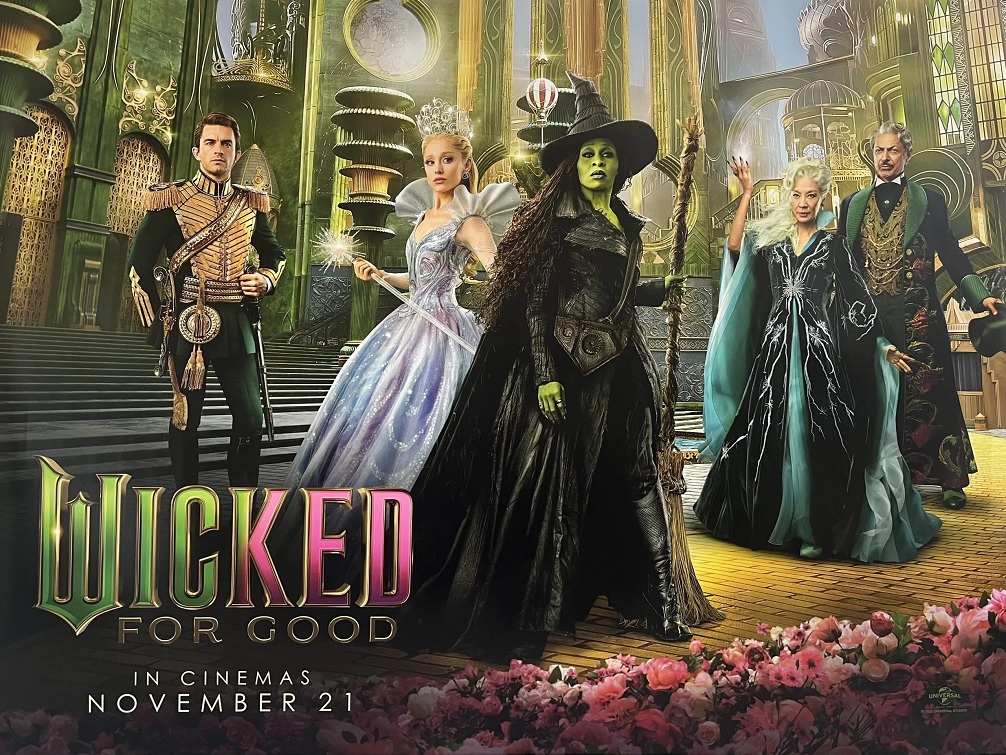
Wicked: For Good and all the images you see in this review are owned by Universal Pictures
Directed by Jon M Chu
When I reviewed the first one, I told myself I’d try to either see the stage production or, more likely, find time to read the book. Sadly, neither of these came to pass, and I was going into this as uninformed as I had been for the first one. Well, there was one thing different, and that’s the fact that I did see the first one and that I enjoyed it quite a bit. It’s certainly a high bar to set for a sequel, and as far as I was concerned, it already had a perfectly good conclusion to the story that didn’t require further elaboration. Still, the show must go on, and the intermission has come to an end long after everyone has had a chance to go to the bathroom. Will this be a brilliant culmination of everything that the first move set into motion, or did the story peak with Elphaba evolving into her final form? Let’s find out!!
The Land of Oz is in turmoil as the Wizard (Jeff Goldblum) and his magical spin doctor Madame Morrible (Michelle Yeoh) are pushing forth their plans to consolidate power by scapegoating the magical creatures of Oz, which includes literal goats, and the only one opposing them is the newly branded Wicked Witch of the West; the extremely powerful Elphaba (Cynthia Erivo) who halts their progress at every turn. Looking to bring the kingdom back together, the similarly branded Glinda the Good Witch (Ariana Grande) tries to find a way to bring Elphaba back to her side and broker peace between her and the Wizard, while keeping her sweet new title as the top witch in Oz. Such power, of course, is the stuff of dreams for someone like Glinda, but when those who gave it to her continue to push Elphaba further and further into a righteous crusade, it only becomes a matter of time before she has to decide what’s truly important to her and how much she’s willing to give up to protect it. Will Glinda prove a capable negotiator and find a way to bring peace to the land? Will Elphaba’s journey lead to Oz’s liberation from the wizard? Is their bond strong enough to overcome the distance between them, or is this a conflict that will only be settled in the ring!?
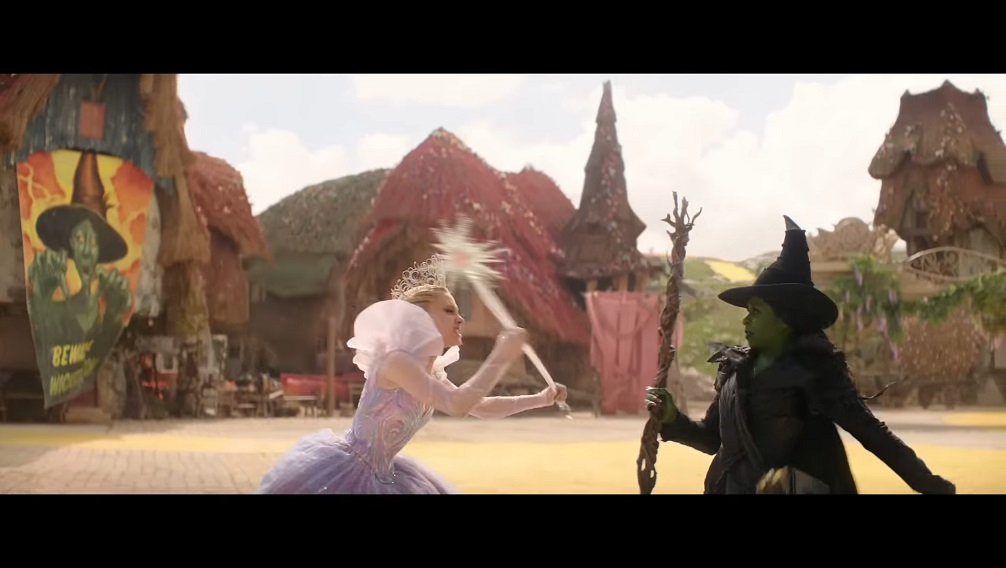
While I know very little about the musical, it’s my understanding that the second half is often considered to be lesser than the first, which is sadly the case here. It’s a hard nut to crack for any adaptation where you’re going into it knowing that some parts work better than others, so I certainly feel for everyone involved who had to try and wrangle this into a workable feature film, but the end result is not only a janky mess, but one that’s exacerbated by its more cinematic elements. I can see a lot of this working better on a stage, especially without the embarrassment of riches for special effects, elaborate locations, and oodles of extras to clutter the frame, and the film does work when it’s trying to keep things small and personal. Unfortunately, the grand nature of the story requires a grand presentation, and that creates a tonal dissonance that permeates every scene of the movie. Where our imaginations would be allowed to fill in the gaps and smooth over certain details when watching this performed onstage, there’s a concrete reality to every single moment here that ultimately raises questions that the movie isn’t prepared to answer; presumably because of how it was written in the stage show. Timing is perhaps the biggest incongruity on display, as the editing makes it feel like we’re rushing as fast as humanly possible through every single event in the story with no time to marinate on anything or for characters to take a breath. The pacing is so frantic that everything in this movie, which is primarily about a war against a calcifying authoritarian government, feels as if it’s happening over less time than the original Wizard of Oz movie; which is doubly exasperating as the entire story of that film takes place in the second half of this one.
Still, while the movie may hop from one event to another with little regard to the filler in-between, there are meaty chunks to enjoy that keep this from being a complete disaster. After all, they have to fit the show tunes in somewhere, and they’re appropriately dazzling throughout. Perhaps not as many bangers as the first one and nothing as show stopping as Defying Gravity, but if you’re here for the songs then you won’t leave disappointed as I was particularly impressed with one of the more low-key songs which made great use of mirrors that was impressive without relying too heavily on spectacle. Where the first film benefited from bombastic music to punctuate its character based narrative, this one keeps itself grounded with Elphaba and Glinda’s relationship that gets a solid amount of screen time in between the bluster. Their strong chemistry from the first film continues to grow here and whenever they’re together you can almost put the rest of the film out of your mind and just focus on their interactions which are fun and playful, but also bitter and heartbreaking; especially from Glinda the Good, who has ascended to Glinda the Collaborator, as she’s the character who has a proper arc in this story; so much so that I wish the movie was almost entirely from her perspective. As much as Cynthia Erivo and her performance carried the first film, it left her with little to do here, and so the movie wisely tries to fit in as much Glinda as possible with her songs book ending the story and wrapping up the themes, much like Elphaba did for the first one.
Unfortunately, the movie can’t just be about a character growing and changing based on the actions of those around her because this is a side-story to the 1939 movie, and so we’re constantly cutting back to Elphaba doing nonsensical things to try and cram this into the margins of the 1939 movie, and to me, this leads to some very cynical juxtapositions that clashes with what the movie is ultimately trying to say. Unlike a tear down and start over rebuild of a character such as in Maleficent, we’re working backwards from the witch being a cackling troublemaker and despised by the people of Oz, so trying to make a story about the dangers of rising Fascism while also getting us to the status quo of the 1939 movie ends up with some of the bleakest social commentary I’ve seen in a while; and the non-ending that subplot gets doesn’t help matters in the slightest. Again, this is something where the more literal and concrete storytelling of filmmaking can clash with how it’s meant to be presented for the stage, and while this could have been a strength to the film, it’s not done with enough intentionality or enough focus to mean anything other than to check a few boxes for attempts at relevance.
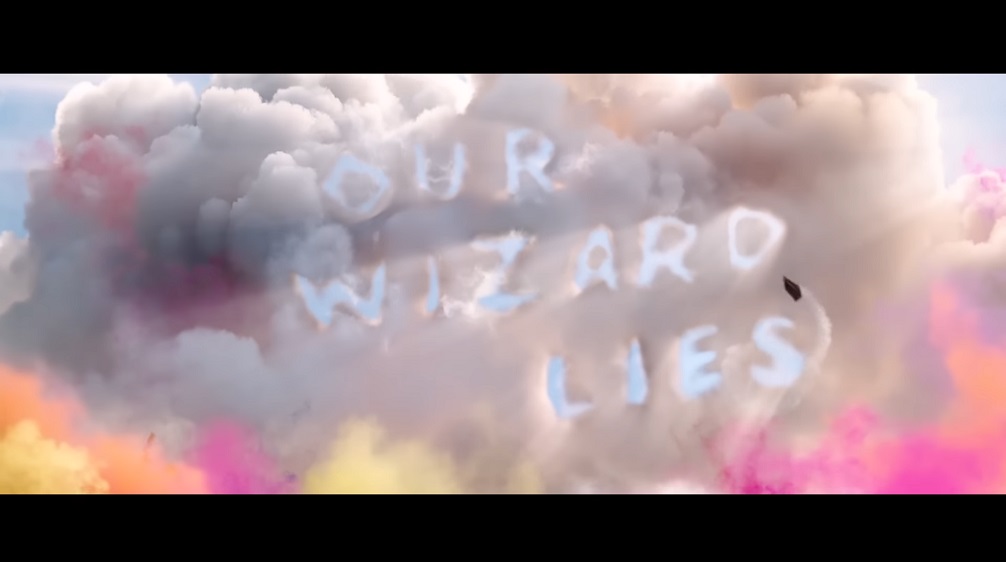
The first film was a genuinely fun musical set in an interesting world of whimsy, but the story and characters are what made it more than just a popcorn flick. This feels bigger and tries to be more important with world shaking events and conclusive endings to our characters, but there’s not enough substance there to carry it to the finish line. The movie knows that it’s at its best when it’s about Elphaba and Glinda, and their relationship becoming stronger and more intimate is the hook that keeps us going. It’s what the film should have stuck with all the way through, but instead, we’re barreling head first into a wrap up of the previous movie before jamming the original Wizard of Oz into this already overstuffed pie, and what should be a simple treat that’s sweet and filling is a mashup of nine different confections with gold leaf, sparklers, and a honey baked ham on top. If you can get to the center of this thing without suffering a toothache or indigestion, there is a genuinely heartfelt story to be told and a well-crafted character arc to be found. Perhaps watching these two movies as one long feature instead of expecting the second half to stand up on its own would end up being a more fulfilling experience, but even with that much leeway, there’s still a lack of focus and an overreliance on dramatic set pieces for this to be a satisfying ending. If you’re invested in seeing this story to its conclusion, then perhaps it’s worth checking out in the theater given the spectacle on display, but I’d be hard pressed to recommend this to anyone who is less than enthralled with the Wicked phenomenon. I suppose I can still read the books and maybe that will give me a fresh perspective on how this movie ended up the way it did, but in the end, an adaptation should stand alongside the original work; not precariously stacked on top of it and hoping that the studio never breaks down and just does a professional recording of the musical.


 The Reviewers Unite