

The Substance and all the images you see in this review are owned by Mubi
Directed by Coralie Fargeat
The movie-going public tends to focus on the big releases while letting all the smaller and niche films fly in under the radar, but every once in a while something manages to smash general audiences in the face, and it’s suddenly the only thing we’re talking about. The trailer for this certainly offers an intriguing premise with its criticism of societal beauty standards and hints at some seriously icky body horror, so it’s no surprise that this one broke the surface and generated a lot of buzz. Does the film live up to the hype surrounding it, or will its talking points stay relevant longer than the audience’s interest in the movie itself? Let’s find out!!
Elisabeth Sparkle (Demi Moore) was once a star of the silver screen but has spent the last few years of her career being a fitness guru with her own long-running daily workout show. Unfortunately for her, and pretty much every woman in Hollywood, the whole town is run by sleazy jerks and there are few sleazier than her producer Harvey (Dennis Quaid) who unceremoniously retires her from her own show for being too old. Let ready to lie down so easily, she jumps on the latest beauty craze which is a mysterious substance called… well, The Substance, that makes wild promises about what can be done to give her back her youthful glow. In a process that would make David Cronenberg proud, Elisabeth becomes two people with the power of The Substance; former starlet Elisabeth and younger up-and-coming star Sue (Margaret Qualley). Both must coexist in an overly complicated and regimented manner, as there’s always a catch with these things, and like most beauty routines or strict diets, it more or less sets her up to fail, and the two halves start to strain under one another’s existence. Just how far will Elisabeth and Sue go to stay relevant in such a beauty obsessed industry, and will the risk be worth the reward? What is the nature of this mysterious goo they are using, and what will happen if they start to chafe against the rules? Will they both realize the monsters that this is turning them into and rebel against the patriarchal system, or is she going to crash and burn, and we’re just along for the ride?
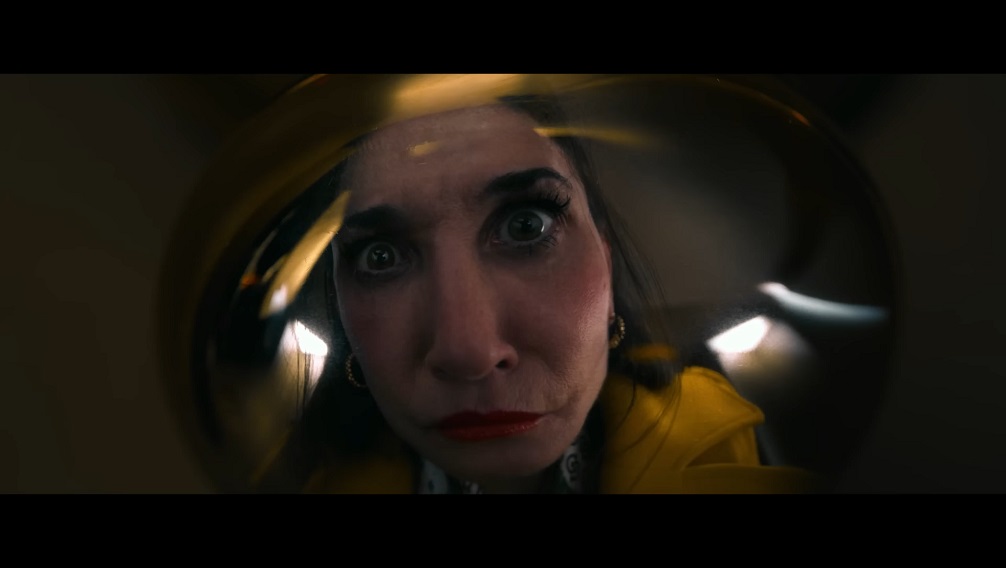
Much like with I Saw the TV Glow earlier this year, I’m feeling a bit out of my lane when reviewing a movie as there are a lot of ideas to wrestle with, but as I sit here trying to put my thoughts into a coherent order, it’s actually much closer to a Darren Aronofsky’s allegorical downer Mother from 2017 which I bounced off like few other movies I’ve reviewed. With that as a starting place, if I can give this one big checkmark without mealy-mouthed qualifications, it’s at least immensely more entertaining than Mother without lessening the severity of its darker moments. It goes to some deep and disturbing places which can feel like shamelessly wonton at time, but it doesn’t take itself so seriously that it can’t break the tension every once in a while and I found plenty of moments to enjoy in between its more difficult scenes. There’s even an escalation of gore and violence that would right at home in a Troma or Sushi Typhoon movie which was as unexpected as it was fun to watch; something you can’t say about most Elevated Horror films these days which can feel stuffy and seem to be above the simple thrills of blood geysers and squishy organs.
That being said, however, the problem with this movie isn’t that it’s too shocking, too bold, or too in-your-face for average audiences to handle, though all of that is true to at least some extent, but that for all its sound and fury, it doesn’t feel like it had much of a conclusion in mind and left me mostly nonplussed rather than haunted. The movie has some solid messaging, but that’s the only string to its narrative bow, and there weren’t a lot of opportunities for me to engage with the characters. The movie is unambiguously surreal and operates on a level of dream logic where the entire world exists in about three buildings and two city streets, so a certain amount of distance from proceedings is to be expected as is the sense of powerlessness in watching someone make mistake after mistake without any way to stop them. I can appreciate that as a storytelling device, but I’m very mixed on how that’s used to get its message across and what it means for the characters who inhabit the world. Surrealism is great at jabbing the parts of our brain that we aren’t entirely conscious of and is a great tool for a horror movie to use, but I found it to clash with the topical themes of the movie which, at least for me, required a bit more specificity or humanity from the plot to feel impactful. This also left me feeling rather uncomfortable about some of its imagery, which, without a plot driven context, feels more harmful than informative. I had a problem with the way they were portraying both food and aging as signs of monstrosity and decay, which I believe is antithetical to the movie’s ultimate message of how these things are wielded against women, but I felt like more context was needed to establish that. Perhaps people who have struggled with eating disorders and with the way that society reinforces unrealistic beauty standards won’t need that context, and I understand that this character experiences it due to the utter self-loathing that she has had instilled in her by societal expectations, but does that in and of itself justify showing these extremely negative images? If there were just a few scenes at the beginning of Demi Moore talking to people and establishing herself as a unique yet relatable person, then some of the film’s portrayals of these issues wouldn’t feel so broadly drawn and there would be less room for these criticisms to take root. As it stands, we know nothing specific about this character and instead, the gaps are filled in with archetypes and clichés. This also applies to the sexuality as there’s a lasciviousness to certain scenes with Margaret Qualley as well as the fact that both her and Demi Moore are naked through a good chunk of it, but the movie never feels grounded enough in its absurd hyper-reality for this to not feel like objectification.
The movie feels like a Rorschach test for the audience, which could be intentional and is often an outcome of surrealistic storytelling, so perhaps my own hang-ups are shining brighter in this review than any of the film’s genuine faults. There are scenes in this movie where the deep self-loathing of Demi Moore’s character shines through in a very human way and these are the scenes where the movie’s themes connected with me the deepest; particularly a scene where a mirror causes her to break down faster than any unproven body-morphing serum. Still, I don’t have the experiences that women have, and so many of the film’s core conceits just didn’t connect with me. The way she interacts with the patriarchal Hollywood system worked for me and made sense and felt like sharply written commentary, but watching her utter self-loathing and lonely existence felt merely cruel. For a woman who’s been marinating in these feelings that are put upon her throughout her entire life, well perhaps it reads as much of a message as the patriarchy scenes did for me, and perhaps Demi Moore is as emblematic and allegorical as Dennis Quaid’s utterly hammy misogyny, but I’m just not equipped to see it. A movie like Death Becomes Her, which is the closest thematic film I can readily call upon, is very mean-spirited and possibly even crueler to women in general than this movie is to Demi Moore, but grounding it in a concrete story with characters who have their own motivations and flaws gives it a decent amount of context and a solid foundation from which to even talk about it. Here, I feel somewhat stymied as there are so many different ways to experience this movie that any one perspective feels inadequate to addressing it, which I suppose can be seen as a positive for the depth of the movie’s ideas, but to me, it felt more like trying to drink a sip from twenty different cups and trying to determine how well each individual liquid quenched my thirst.
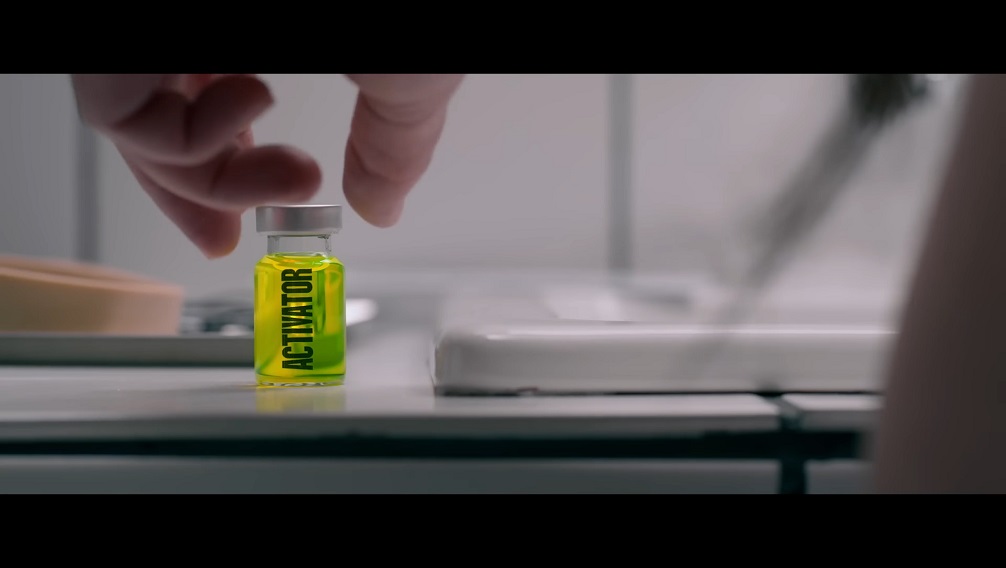
I suppose that somewhere between this movie and Death Becomes Her, you’ll find a perfect balance between exploring our culture’s inhumanity to women and making an entertaining movie. Then again, I don’t think that filmmakers should be consulting with me when deciding what movies to make; otherwise I would have gotten my Megas XLR movie by now. Not every movie is going to be for all audiences, and there should be space in this world for projects like this to wrestle the spotlight away from its bigger budgeted and more digestible peers. I suppose that I recommend it as long as you consider all the caveats I’ve laid out, and as long as you don’t blame me if you didn’t like it. It’s not an easy movie to sit through, and I applaud it for much of what it was trying to accomplish, but much like the substance in the movie, there are still a few kinks to work out before selling it at your local Walmart.


 The Reviewers Unite